๐Ÿ—ณ๏ธ Today is Election Day ยท Polls close at 8 PM CST ยท Find your polling place at sos.iowa.gov

About the Office

The Iowa Secretary of State is Iowa's chief elections officer and business registration officer, elected to a four-year term. The office administers federal and state elections, certifies election results, maintains voter rolls, registers businesses, and oversees the state's notary public program.

This office decides how Iowa elections are administered like voter ID requirements, mail-in ballot rules, early voting periods, and which technology counties use for voting. It also processes every business filing in the state.

Race at a Glance

Incumbent
Pate (R)
Term Length
4 Years
Election Day
Nov 3, 2026

Paul Pate, first elected in 1994, is the second-longest-serving Secretary of State in Iowa history. Ryan Peterman, a 34-year-old former Navy helicopter pilot and Naval Academy graduate, won the Democratic nomination.

The Candidates

Each candidate's positions are drawn from primary sources: campaign communications, voting records, debates, and direct interviews.

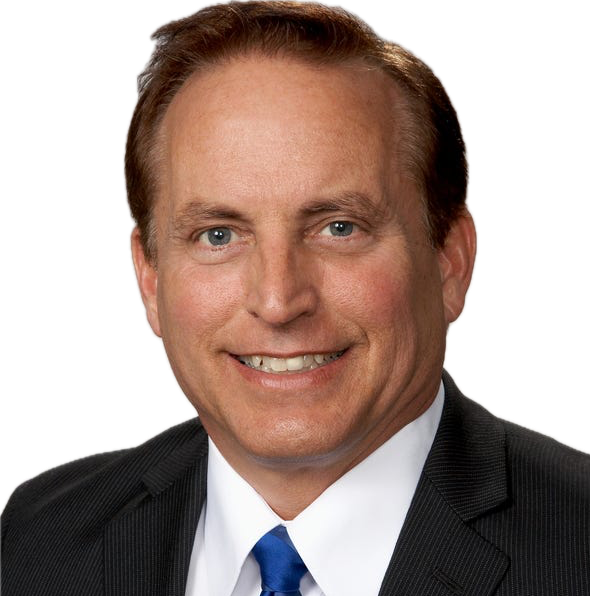
Paul Pate

Paul Pate (R)

Republican incumbent ยท Iowa Secretary of State (4 non-consecutive terms)

Visit campaign site โ†’
Bio and Career

Pate was born in Ottumwa and grew up in Linn County. He earned an associate's degree from Kirkwood Community College in 1978 and built his business career as owner of a paving construction firm in Cedar Rapids, work that later earned him recognition as a Small Business Administration business leader. In 1988, at age 29, he was elected to the Iowa State Senate representing northeast Cedar Rapids and parts of Linn, Buchanan, and Delaware counties. He was the youngest member of the chamber at the time and served two terms through 1995.

Pate was first elected Iowa Secretary of State in 1994, serving from 1995 to 1999 under Gov. Terry Branstad. He did not seek reelection in 1998, instead running unsuccessfully for the Republican gubernatorial nomination. He then served two terms as Mayor of Cedar Rapids (2002โ€“2006) and was elected President of the Iowa League of Cities, representing more than 870 municipalities. He returned to the Secretary of State's office in 2015 after winning the 2014 general election over Democrat Brad Anderson. He was reelected in 2018, defeating Democrat Deidre DeJear, and in 2022, defeating Democrat Joel Miller. He served as president of the National Association of Secretaries of State (NASS) in 2019โ€“20.

Pate is now serving his fourth term and is the second-longest-serving Secretary of State in Iowa history. During his current tenure he instituted online voter registration, established the Safe at Home address confidentiality program for survivors of domestic violence and trafficking, and backed the 2017 Election Integrity Act that brought voter ID requirements to Iowa. In May 2026, Pate provided Iowa's voter registration data, including driver's license and Social Security numbers, to the U.S. Department of Justice (DOJ), saying federal law required it. About 30 other states refused and were sued by the DOJ. His office cites an MIT ranking placing Iowa among the top three states for election administration.

Primary Issues
Election Security & Integrity

Says his goal is to "make it easy to vote, but hard to cheat," and that integrity and participation go together. Championed Iowa's voter ID law and paper ballots, and created standardized training for poll workers in all 99 counties. Describes his role as the "ref" who enforces election law without partisanship. He also says the acceptable number of both fraudulent votes and eligible voters turned away is zero, and tells county auditors to offer provisional ballots whenever a voter's eligibility is in doubt. Cites countering foreign disinformation as a core part of the job.

State Control of Elections

Pate says the Constitution gives states the power to run elections, and that he opposes any federal effort to stop mail voting, urging the White House to "trust Iowans to run our elections." Defends giving Iowa's voter registration data to the Department of Justice after review by his attorneys and the Attorney General, saying he refused to sign the Department's proposed agreement and set his own conditions on how the data could be used. Supports a national voter ID requirement.

Youth Voter Engagement

Emphasizes civic education initiatives including the Iowa Youth Straw Polls, the Iowa Youth Caucus, and the Catt Collegiate Challenge encouraging college students to register to vote. He has framed these initiatives as building long-term civic participation.

Endorsements
  • Republican Party of Iowa
Donor Information
  • Total individual contributions: 215
  • In-state: 206 (95.8%) Out-of-state: 8 (3.7%)
  • Small-dollar donors ($100 or less): By count: 134 of 215 (62.3%) By dollar volume: $7,799 of $90,829 (8.6%)
1. RSLC Victory Fund โ€” Washington, DC โ€” $10,000
Political action committee affiliated with the Republican State Leadership Committee, which supports Republican candidates for state-level offices nationwide.
1. Gage Kent โ€” Muscatine, IA โ€” $10,000
CEO of Kent Corporation, a Muscatine-based global agribusiness holding company.
3. Daniel and Phyllis Rupprecht โ€” West Des Moines, IA โ€” $5,000
Founder of R&R Realty Group.
3. DFL Revocable Trust / Donald Lamberti โ€” Ankeny, IA โ€” $5,000
Co-founder of Casey's General Stores.
3. Jeffrey Lamberti โ€” Ankeny, IA โ€” $5,000
Real estate attorney and son of Casey's co-founder Donald Lamberti.

Source: Iowa Ethics and Campaign Disclosure Board (IECDB), as of July 14, 2026. webapp.iowa.gov/iecdb
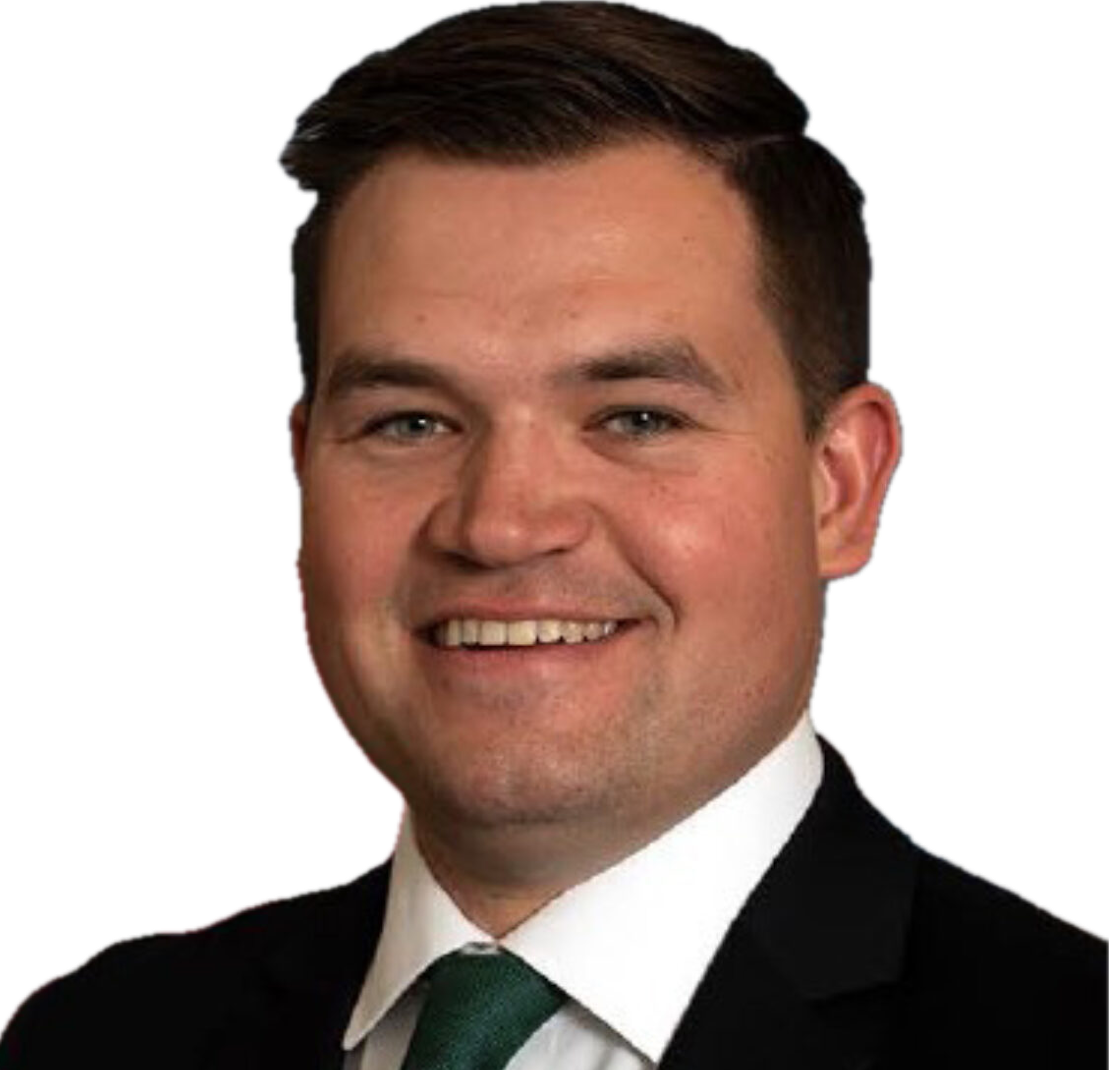
Ryan Peterman

Ryan Peterman (D)

Democratic nominee ยท U.S. Navy veteran ยท Former helicopter pilot

Visit campaign site โ†’
Bio and Career

Peterman was born and raised in Bettendorf in the Quad Cities, in what he describes as a family of teachers, veterans, and small business owners. He attended the United States Naval Academy in Annapolis and was commissioned as a Navy officer after graduation, then attended flight school in Pensacola, Florida. He served roughly a decade as a Navy helicopter pilot, leading sailors on overseas deployments.

During his military career, Peterman spent a year on Capitol Hill through a Department of Defense legislative fellowship, advising U.S. Sen. Jeanne Shaheen (D-NH) on defense and national security policy. He then returned to the Naval Academy as the Honor Education and Mediation Officer, mentoring future officers on honor, accountability, and ethical leadership. After about 14 years in uniform, he left the Navy and returned to Iowa, initially getting involved in civilian life by volunteering with local Democratic campaigns.

Peterman announced his campaign for Iowa Secretary of State in May 2025 and ran unopposed in the June 2026 Democratic primary. He has pledged to visit all 99 Iowa counties during the campaign and to build working relationships with the county auditors who administer elections locally. His campaign centers on what he calls a "nonpartisan approach" to election administration by making voting more accessible while maintaining election security. He has repeatedly said he is "not running to be a partisan warrior." This is his first run for public office.

Primary Issues
Expanding Voter Access

Argues Iowa has made voting harder, citing the early voting window cut from 40 days to 20, polling place closures, and voter roll purges. Would ask the legislature to lengthen the window again and, if lawmakers refuse, let county auditors mail absentee ballots before the 20-day period begins. Supports restoring voter attestation, which lets a registered voter vouch for another voter's identity, saying there's no evidence it led to fraud. Pledges to defend voting by mail. Acknowledges he can't change these laws on his own.

Election Security Through Professional Administration

Peterman says security and access are complementary rather than competing goals: "we can't do one without the other." Supports prosecuting noncitizen voting, while arguing it is "exceedingly rare" because noncitizens risk deportation or losing a path to citizenship. Backs using available databases and working with other states to catch duplicate or ineligible registrations. Opposes shortening voting periods in the name of security, saying it reduces access without improving security. Would review the office's election procedures, including candidate filing challenges.

Voter Data Privacy & Transparency

Says Pate should not have given Iowans' voter data to the DOJ and that he would refuse similar requests, noting Pate declined to share similar data with the Trump administration in 2017. About 30 states refused the DOJ's request, including some led by Republicans, and federal courts have ruled against the DOJ in every lawsuit decided so far. Filed public records requests for the data Iowa sent and for communications with the DOJ and the Attorney General's office.

Endorsements
  • Democrats Serve
  • VoteVets
Donor Information
  • Total individual contributions: 2,291
  • In-state: 1,868 (81.5%) Out-of-state: 400 (17.5%)
  • Small-dollar donors ($100 or less): By count: 2,008 of 2,291 (87.6%) By dollar volume: $57,385 of $379,694 (15.1%)
1. The Majority Rules PAC โ€” Des Moines, IA โ€” $97,000
Anti-gerrymandering political action committee.
2. Rod Womer, Barbara Womer, and Karplus โ€” Newbury Park, CA โ€” $20,000
Founders of the Woka Foundation.
3. Keith Whipple โ€” Cedar Rapids, IA โ€” $17,500

Source: Iowa Ethics and Campaign Disclosure Board (IECDB), as of July 14, 2026. webapp.iowa.gov/iecdb

How the Office Would Change

Pate would continue his current approach: voter ID, paper ballots, post-election audits, standardized poll worker training, cybersecurity partnerships, and online business services. He argues this has increased both voter registration and turnout since he took office and earned national recognition for Iowa. He would continue working with federal agencies on citizenship verification, including the 20 years of SAVE database access Iowa secured in a December 2025 settlement, while opposing federal control over how states run elections.

Peterman would ask the legislature to restore voting access, including a longer early voting window and voter attestation, and would refuse federal requests for Iowans' nonpublic voter data. He would review the office's election and business-filing procedures with a focus on customer service, saying it should be easy to reach someone at the office by phone or online. He describes his approach as nonpartisan, saying the job is not to "shape elections" toward a preferred outcome, and cites his work in the Naval Academy's honor office as the basis for his emphasis on integrity.

Both candidates say Iowa's elections should be both secure and accessible. They disagree on whether the state's shorter voting window and recent citizenship checks are responsible safeguards or unnecessary barriers, and on whether Pate was right to share Iowans' voter data with the U.S. Department of Justice.

Share This Guide