🗳️ Today is Election Day · Polls close at 8 PM CST · Find your polling place at sos.iowa.gov

About the Office

The Iowa Secretary of Agriculture leads the Iowa Department of Agriculture and Land Stewardship, elected to a four-year term. The Secretary oversees agricultural inspections, soil and water conservation programs, pesticide regulation, food safety, and state grain warehouse licensing.

This office shapes Iowa's agricultural and water policy, including the voluntary versus mandatory approach to reducing farm runoff pollution that affects drinking water across the state. It also regulates pesticides, food safety, and weights and measures.

Race at a Glance

Incumbent
Naig (R)
Term Length
4 Years
Election Day
Nov 3, 2026

Mike Naig has held the office since 2018 when he was appointed by Gov. Reynolds and then elected later that year. Chris Jones is a retired University of Iowa water research scientist who founded the Iowa Driftless Water Defenders.

The Candidates

Each candidate's positions are drawn from primary sources: campaign communications, voting records, debates, and direct interviews.

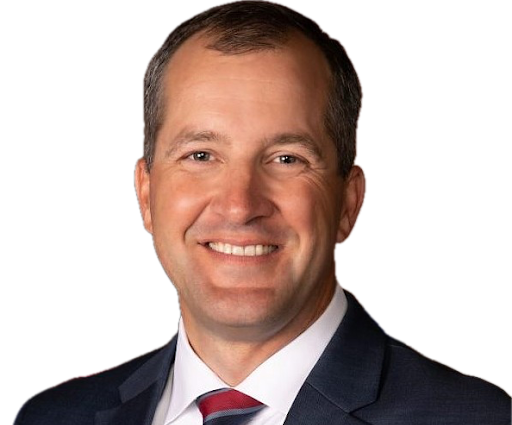
Mike Naig

Mike Naig (R)

Republican incumbent · Iowa Secretary of Agriculture since 2018

Visit campaign site →
Bio and Career

Naig was born on March 2, 1978, and grew up on his family's Century Farm near Cylinder in northwest Iowa, where he learned crop and livestock farming from his father and uncle. He remains involved in the family operation as its fourth generation. He graduated from Emmetsburg High School in 1996 and earned bachelor's degrees in biology and political science from Buena Vista University in Storm Lake in 2000, then spent 13 years in agribusiness working in public policy roles for state and national trade associations and in private industry.

Naig joined the Iowa Department of Agriculture and Land Stewardship as Deputy Secretary in September 2013 under then-Secretary Bill Northey, handling the department's policy, budget, and personnel operations. When Northey left in March 2018 to serve as USDA Under Secretary for Farm Production and Conservation, Gov. Kim Reynolds appointed Naig to serve out the remainder of the term. Naig won a full four-year term in November 2018, defeating Democrat Tim Gannon by 3%, and was reelected in 2022 by defeating Democrat John Norwood.

Primary Issues
Iowa Nutrient Reduction Strategy & Voluntary Conservation

Continuing to foster his public-private partnership involving 350+ organizations focused on water quality, soil health, and reducing nitrogen and phosphorus loading. Frames voluntary, farmer-led conservation as the path to environmental progress rather than new regulation.

Expanding Markets, Trade & Biofuels

Regularly leads international trade missions and advocates for policies opening new markets for Iowa livestock, crop, and agribusiness producers. Strong supporter of ethanol and biodiesel as both economic drivers and climate solutions, positioning biofuels as alternatives to electric vehicles.

Opposing ESG in Agriculture Finance

Joined a coalition of Republican state agriculture commissioners investigating major U.S. banks over their Net-Zero Banking Alliance participation, arguing Environmental, Social, and Governance-driven lending policies could disadvantage American farmers. Frames the effort as protecting Iowa producers from what he calls "political investing".

Endorsements
  • Iowa Farm Bureau Federation
  • Iowa Corn Growers Association
  • Republican Party of Iowa
Donor Information
  • Total individual contributions: 886
  • In-state: 821 (92.7%) Out-of-state: 65 (7.3%)
  • Small-dollar donors ($100 or less): By count: 408 of 886 (46.0%) By dollar volume: $32,741 of $693,089 (4.7%)
1. RSLC Victory Fund — Washington, DC — $150,000
Political action committee affiliated with the Republican State Leadership Committee, which supports Republican candidates for state-level offices nationwide.
2. JT Broin Trust — Sioux Falls, SD — $35,000
Trust associated with Jeff Broin, founder and CEO of POET LLC, one of the world's largest biofuel and ethanol producers.
3. Jim Dean — Sioux Center, IA — $20,000

Source: Iowa Ethics and Campaign Disclosure Board (IECDB), as of July 14, 2026. webapp.iowa.gov/iecdb

Chris Jones

Chris Jones (D)

Democratic nominee · Retired UI water research scientist · Founder, Iowa Driftless Water Defenders

Visit campaign site →
Bio and Career

Jones is a research scientist, author, and one of Iowa's leading water quality experts, with more than 40 years advocating for clean water and sustainable agricultural practices. He managed the water quality testing laboratory at Des Moines Water Works for eight years, then worked for eight years as a research engineer at the University of Iowa's Iowa Institute of Hydraulic Research, where he directed the state's network of stream pollution monitors before retiring in May 2023.

During his time at IIHR, Jones built a large public following through a University-sponsored blog documenting agricultural sources of Iowa's water pollution, and now writes a Substack newsletter on the same subjects for more than 5,000 subscribers. In 2023 he published "The Swine Republic: Struggles with the Truth about Agriculture and Water Quality," and in 2024 he co-founded the nonprofit Iowa Driftless Water Defenders focused on water quality in northeast Iowa's Driftless Region. He has been a public critic of state legislators who have moved to cut funding for the water quality monitoring programs he supported at IIHR.

Jones launched his campaign for Iowa Secretary of Agriculture on January 15, 2026 outside the Des Moines Water Works, framing the office as needing "a secretary of agriculture that is for the people ... and not just for corporate agriculture". He defeated Marshalltown-area farmer Wade Dooley in the June 2, 2026 Democratic primary. His platform centers on diversifying Iowa's corn-and-soybean cropping system, transitioning livestock production away from concentrated animal feeding operations, stronger regulation of agricultural polluters, and expanded access to locally grown food.

Primary Issues
Water Quality & Regulating Agricultural Pollution

Argues Iowa's drinking water crisis, the 6,000+ private wells contaminated with nitrate, plus recurring contamination affecting Des Moines, Cedar Rapids, Iowa City, and other communities, cannot be fixed by voluntary measures alone. Would push for stronger regulation of polluters and concentrated animal feeding operations

Diversifying Iowa's Cropping & Livestock Systems

Wants to move Iowa beyond the current corn-and-soybean monoculture (94% of Iowa cropland per USDA) by subsidizing alternative crops like oats and forage crops (clover, hay, alfalfa), and transitioning livestock production away from confinement toward pasture-raised methods. Argues this would improve both environmental outcomes and farmer profitability.

Local Food Systems & Anti-Corporate Framing

Supports expanded access to locally grown food and infrastructure supporting smaller, diverse producers rather than industrial-scale operations. Frames Iowa's current agricultural economy as "extracting the wealth" for out-of-state corporate interests while leaving Iowans "burdened with the responsibility for coping with this pollution."

Endorsements
  • Iowa Driftless Water Defenders
  • Iowa Environmental Council
  • Iowa Democratic Party
Donor Information
  • Total individual contributions: 1,928
  • In-state: 1,755 (91.0%) Out-of-state: 173 (9.0%)
  • Small-dollar donors ($100 or less): By count: 1,609 of 1,928 (83.5%) By dollar volume: $68,898 of $258,856 (26.6%)
1. Tony Singh — Le Claire, IA — $16,000
Founder of a wealth management group.
2. James Larew — Iowa City, IA — $11,485
Owner of the Larew Law Office.
3. Donna Buell — Spirit Lake, IA — $10,100
Credit and debt lawyer.

Source: Iowa Ethics and Campaign Disclosure Board (IECDB), as of July 14, 2026. webapp.iowa.gov/iecdb

How the Office Would Change

Naig has run the Iowa Department of Agriculture and Land Stewardship as a partnership-driven advocate for Iowa producers, emphasizing voluntary conservation through the Iowa Nutrient Reduction Strategy, expanded export markets for livestock and crop producers, and biofuels as both an economic engine and a climate solution. He argues that Iowa's agricultural progress on water quality and soil health is best achieved by working alongside farmers and agribusiness rather than through new regulation, and has joined national Republican efforts to push back against ESG lending policies he says could hurt American producers.

Jones has proposed reorienting the office toward direct regulation of agricultural pollution and a structural reshaping of Iowa's farm economy, moving beyond the current corn-and-soybean monoculture and out of large-scale confinement livestock operations toward more diversified cropping, pasture-raised livestock, and stronger local food systems. His central argument is that the voluntary approach has failed to protect Iowa's water and public health, and that the Secretary of Agriculture should represent all Iowans, including consumers, rural communities affected by pollution, and small and diverse producers, rather than being what he calls "a farmer popularity contest".

The choice on this office is between continuing the current voluntary-partnership approach with Iowa's commodity agriculture industry or shifting to direct regulation and structural change.

Share This Guide