๐Ÿ—ณ๏ธ Today is Election Day ยท Polls close at 8 PM CST ยท Find your polling place at sos.iowa.gov

About the Office

The Iowa State Auditor is Iowa's independent fiscal watchdog, elected to a four-year term. The Auditor reviews financial operations of state and local government, conducts performance audits, and investigates allegations of mismanagement or fraud.

This office is supposed to provide independent oversight of how state and local governments spend taxpayer dollars, regardless of which party controls those governments. Recent legislation has limited what auditors can investigate, making this race a debate over what the office should be.

Race at a Glance

Race Type
Open Seat
Term Length
4 Years
Election Day
Nov 3, 2026

This is an open seat since incumbent Rob Sand is running for Governor. Chris Cournoyer, Lt. Governor, is the Republican nominee. Taylor Wettach is the Democratic nominee.

The Candidates

Each candidate's positions are drawn from primary sources: campaign communications, voting records, debates, and direct interviews.

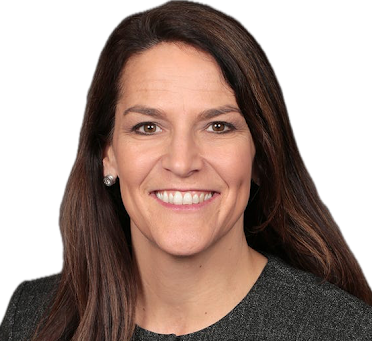
Chris Cournoyer

Chris Cournoyer (R)

Republican nominee ยท Lt. Governor of Iowa

Visit campaign site โ†’
Bio and Career

Cournoyer was born on July 24, 1970 in Dallas, Texas, and earned a bachelor's degree in computer science from the University of Texas at Austin in 1992. She began her career as a senior consultant at Andersen Consulting before starting her own web development business, which she ran from 1997 until becoming Lt. Governor in 2024. She has also worked as a substitute teacher, taught robotics and coding to students, and served as a reserve deputy with the Scott County Sheriff's Office.

Cournoyer served two terms on the Pleasant Valley Community School Board, including as board president. In 2018 she won an open, Democratic-held Iowa Senate seat (District 49), and after redistricting was reelected in 2022 in District 35 (Clinton, Jackson, and Scott counties). She chaired the Senate Technology Committee and the Education Budget Committee, served as vice chair of the State Government Committee, and led work on Iowa's 2023 consumer data privacy law. She also voted for a 2023 bill removing the State Auditor's ability to take state agencies to court to compel records. In December 2024, Gov. Kim Reynolds appointed her Iowa's 48th Lieutenant Governor after Lt. Gov. Adam Gregg resigned to become CEO of the Iowa Bankers Association. As Lt. Governor she leads the Empower Rural Iowa initiative and the Governor's STEM Advisory Council, and chairs Iowa's America 250 commission.

Cournoyer filed to run for State Auditor in April 2025, and launched her campaign with Gov. Reynolds' endorsement on May 6, 2025.

Primary Issues
Fiscal Discipline & Cutting Government Waste

Describes the Auditor as an independent watchdog for Iowa taxpayers who roots out "waste, fraud, and abuse." Points to her school board lowering its levy 41 cents as assessments rose, and to the governor's realignment she supported in the Senate, which she says saved over $200 million by consolidating state IT. Argues local governments must run leaner to cut property taxes, and says people who steal public money should be required to pay it back.

Faster Audits Through Modernization

Says audits take too long, some up to two or three years, and wants to speed them up with technology. Proposes piloting AI-assisted audit software with human review, a grant program modeled on Empower Rural Iowa to help local governments modernize their books, applying DOGE Task Force recommendations at the local level, and basing auditors regionally. Cites the McCausland city clerk case, where the state investigation took about eight months after the bank flagged the theft.

Depoliticizing the Office

Argues the Auditor should keep political opinions private and let audit findings speak. Her main example is the ESA program: she says Sand publicly opposed it, then audited it and found no spending issues. Sand says the February 2026 audit was limited because the administration took six months to provide the records he requested. She says she is not using the office as a stepping stone to higher office and pledges to prioritize transparency, efficiency, and results.

Endorsements
  • Republican Party of Iowa
  • Iowa Governor Kim Reynolds
  • U.S. Senator Joni Ernst
  • State Treasurer Roby Smith
Donor Information
  • Total individual contributions: 287
  • In-state: 274 (95.5%) Out-of-state: 13 (4.5%)
  • Small-dollar donors ($100 or less): By count: 100 of 287 (34.8%) By dollar volume: $7,603 of $388,848 (2.0%)
1. Marilyn and Burt Gearhart โ€” LeClaire, IA โ€” $52,750
Parents of Chris Cournoyer
2. Gage Kent โ€” Muscatine, IA โ€” $18,500
CEO of Kent Corporation, a Muscatine-based global agribusiness holding company.
3. Lawrence Bay โ€” Port Byron, IL โ€” $16,000
Businessman and former mayor of Port Byron.

Source: Iowa Ethics and Campaign Disclosure Board (IECDB), as of July 14, 2026. webapp.iowa.gov/iecdb
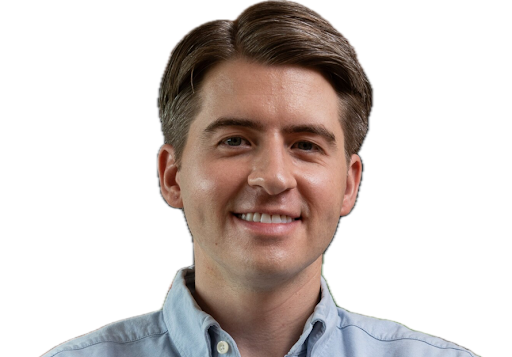
Taylor Wettach

Taylor Wettach (D)

Democratic nominee ยท Trade & national security attorney

Visit campaign site โ†’
Bio and Career

Wettach was born and raised in Muscatine, Iowa, and describes himself as a seventh-generation Iowan. He earned both a bachelor's degree and a master's degree from Georgetown University's School of Foreign Service before attending New York University School of Law.

Wettach practiced as an international trade and national security attorney at the New York-based law firm Simpson Thacher & Bartlett, negotiating with major corporations and federal government agencies on complex legal and policy issues. In April 2025, after Simpson Thacher received an EEOC inquiry into its diversity hiring practices, the firm settled with the Trump administration to avoid a potential executive order, agreeing to provide $125 million in free legal work for causes the administration supports. Wettach resigned in protest and returned to Iowa.

Wettach initially launched a campaign for U.S. House in Iowa's 1st Congressional District in July 2025 to challenge Rep. Mariannette Miller-Meeks, but pivoted on January 26, 2026 to run for State Auditor. He attributed the shift to what he called efforts by Reynolds and Cournoyer to "weaken oversight capabilities" of the office. He has praised Democratic State Auditor Rob Sand's tenure and pledged to continue Sand's approach of positioning the office as a nonpartisan watchdog.

Primary Issues
Restoring the Independence of the Auditor's Office

Argues that Reynolds and Cournoyer have "moved to weaken the independence and authority" of the office through 2023 legislation limiting the auditor's ability to compel records from state agencies, and pledges to fight to restore the office's investigative power. Says he would seek repeal of the 2023 law regardless of which party holds the governor's office, and that if Sand is elected governor, he would audit Sand's administration like any other.

Education Savings Account (ESA) Transparency

Says taxpayers should be able to see where ESA money goes, and that private schools receiving it are not held to the same accountability standards as public schools. Says he is not opposed to families choosing private schools. Argues Sand's ESA audit was limited because the administration was slow to provide records, and says he would seek fuller access to the program's records.

Supporting Local Governments & Economic Accountability

Wants the office to invest in prevention by giving small towns and rural governments the training and technology to keep sound books, comparing it to primary care versus treating problems after the fact. Would continue Sand's Public Innovations and Efficiencies (PIE) program and remote staffing for auditors living outside Des Moines. Also wants the office to examine whether companies receiving tax abatements deliver the promised jobs and investment, whether contractors on public projects commit wage theft or worker misclassification, and whether fines for labor and environmental violations are paid.

Endorsements
  • Iowa Democratic Party
  • Former Iowa Gov. and U.S. Agriculture Secretary Tom Vilsack
  • Former Iowa Attorney General Tom Miller
  • Iowa Democratic Party Chair Rita Hart
Donor Information
  • Total individual contributions: 979
  • In-state: 741 (75.7%) Out-of-state: 237 (24.2%)
  • Small-dollar donors ($100 or less): By count: 385 of 979 (39.3%) By dollar volume: $24,164 of $981,663 (2.5%)
1. George Koenigsaecker โ€” Muscatine, IA โ€” $100,000
Owner of Lean Investments LLC.
2. Dr. David Wettach โ€” Muscatine, IA โ€” $99,000
Family Physician and father to Taylor.
3. Frederick W. Weitz โ€” Des Moines, IA โ€” $70,100
Former CEO of The Weitz Company, a Midwest construction and development firm.

Source: Iowa Ethics and Campaign Disclosure Board (IECDB), as of July 14, 2026. webapp.iowa.gov/iecdb

How the Office Would Change

Cournoyer says she would integrate artificial intelligence into audits, shorten audit timelines, help local governments modernize through grants and DOGE Task Force recommendations, and "support our Republican legislature in reducing the property tax burden". Asked whether she would seek to restore the records powers removed in 2023, she said the Auditor should be able to obtain documents "where it's appropriate," but that the power needs checks to protect Iowans' privacy. She has defended the 2023 changes, which she describes as guardrails, including a required letter of engagement before an audit.

Wettach would seek to restore the investigative authority he says was eroded by the 2023 law limiting the Auditor's access to state agency records, a bill Cournoyer voted for as a state senator. He would continue Sand's approach while expanding training and technology support for small and rural governments, pursuing fuller access to ESA records, and examining whether tax-abatement recipients and public contractors meet their obligations. Until the law changes, he says he would work within its dispute process and hopes a governor more willing to share records would make that easier.

Both candidates describe the Auditor as an independent, nonpartisan watchdog. They disagree on what that requires: Cournoyer argues the 2023 limits on its records access are needed guardrails, while Wettach argues those limits weaken oversight of state government and should be repealed.

Share This Guide